Following a coup in Egypt, civil war in Syria, and mounting
armed conflict in Libya, Tunisia may well be the Arab Spring’s last hope for a
true success story. Three years after deposing dictator Zine El Abidine Ben
Ali, Tunisia’s populace has voted in its second parliamentary election, and
preliminary results show that the leading secularist party Nidaa Tounes (“Call
for Tunisia”) has won 80 of 217 parliamentary seats. Nidaa finished ahead of
the incumbent Islamist party Ennahda (67 seats), and its electoral success is
viewed as a mandate from the people to uphold Tunisia’s secular reputation.
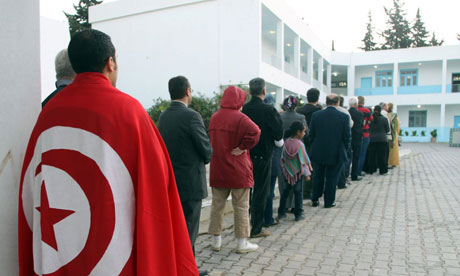 |
| Tunisians line up at the polls. Photo courtesy EPA. |
Among the states that experienced regime change during the
Arab Spring, Tunisia stood alone for its history of secularism and relatively
peaceful transition. Following the uprising, however, Ennahda’s rise to power
coupled with two assassinations of secular opposition leaders and attempted
suicide attacks led to fears that the country was backsliding into extremism.
These fears are hardly surprising given the tragic trail of events in Egypt,
Libya, and Syria, but do not appear to be manifesting in the latest elections. While extremist parties
like Ansar al-Sharia continue to threaten political stability, the willingness
of Ennahda, Nidaa Tounes, and the multitude of smaller political parties to
seek coalition and cooperation has for now overcome their ideological differences in the interest of stability.
