Showing posts with label Putin. Show all posts

Thursday, February 26, 2015

Sucks to Be U(kraine)

Ukrainian leadership must be very weary these days.

It was reported yesterday that Russia has again escalated its conflict with Ukraine by threatening (again) to cut off gas supplies within the next two days if Ukraine cannot pay Gazprom, the Russian energy giant, what it owes. As fighting rages on in the east, winter rages on throughout Ukraine and Europe - natural gas is literally vital to the survival of many throughout the next several weeks. The natural gas dilemma also constitutes a severe economic threat to Ukraine, who has banned the purchase of foreign currency as its own continues to slide. Ukraine's economy is hanging on by a thread these days; any disruption in energy supplies would be catastrophic. Europe, too, is not in the most secure of financial positions - particularly the eurozone. With much of Western Europe's natural gas supply coming from Russia in pipelines that run through the Ukraine, they stand with as much to lose as Ukraine itself.

Courtesy of Telegraph

Perhaps most frustrating about Russia's threat is that the Ukraine alleges it prepaid months ago a sum large enough to cover their natural gas supply through the whole winter. So where is the discrepancy? It lies in Eastern Ukraine, which has been controlled by pro-Russian separatists for months. Russia has been pumping gas directly to the separatists through different pipelines in order to keep them warm as they serve as proxies in the fight to shatter Ukraine's sovereign borders. Russian President Putin is calculated in doing this: he can support those loyal to him across the border, without having to financially support them. All he has to do is argue that the region is technically part of Ukraine, so the energy supplied there comes out of Ukraine's budget.

Meanwhile, most likely according to Putin's plan, all of Europe is slowly destabilizing. Lithuania yesterday reintroduced conscription, out of fear of Russian aggression spilling over into its borders the way it did Ukraine's. Lithuanian leaders estimate adding 3,500 or so additional soldiers to their army each year, at least for the next five years. While not instituting a compulsory policy like their neighbor, Latvia has also pledged to ramp up its military spending and bolster its armed forces in the event of Russian aggression. If nothing else, the conflict in Ukraine has put the entire former Soviet bloc on edge as it creeps closer to an all-out armed engagement. Russia's unpredictability has only exacerbated anxieties.

And yet, the separatists in Eastern Ukraine march forward, this time to the port city of Mariupol. Should this be their destination, it would mark a significant shift in the conflict - Mariupol is on the way to Crimea, and it would indicate that the separatists are making an effort to carve out a path connecting their stronghold farther up north to the annexed Crimea. France's foreign minister has already warned Russia that this would be a red line, suggesting a retaliation of some sort, although this is a weak threat considering the fact that the conflict has lasted months without any direct military intervention from the U.S. or any European country. Should Ukraine fail to secure Mariupol, it's hard to see any real, effective response from the west.

Courtesy of Reuters

So what is Ukraine to do? For starters, it's time to give up the east.

This is a frightening suggestion, one that seemingly defies the logic that has kept the developed world relatively conflict-free in the 21st century. And there are major downsides - most notably, that it will be giving Russia what they want, and incentivizing similar action in other corners of the former Soviet bloc. But it is a necessary action, one that will mostly free Ukraine from conflict while stabilizing their economy.

As mentioned earlier, Russia has effectively equipped rebels in eastern Ukraine and enabled them to successfully fend off Ukrainian soldiers, while placing the entire financial burden of the roughly three million who live in the east on the shoulders of Ukraine. This is too large a burden for a country that is just barely remaining out of the grip of default, and undermines their military's position in the region. By ceding the region to Russia, the separatists will become Russian citizens; the three million that live there will look to Russia for financial support, and it will no longer be possible for Russia to wage conflict in Ukraine under the thin veil of the separatists being "Ukrainian citizens". Now, this is one belligerent nation attacking another - something that would garner a much swifter, and severe, response.

Ukraine will also be able to slowly allocate their meager finances elsewhere, such as industrial development (importantly, development that no longer relies on the fossil fuels Russia has stockpiles of), economic development, and independent energy supplies. This will be a long and difficult journey, but with the proper finesse, Ukraine can shift its economy and reach a modest stability that will allow for job growth and better ties with the eurozone. When (if) the conflict dies down entirely, foreign investment can accelerate this growth.

Courtesy of BBC

This is not a panacea, however. In the meantime, Ukraine and the rest of Europe must find alternative sources of energy in an effort to release themselves from the influence of Russian energy. Winter is far from over, and if Russia makes good on its promises to stanch the flow of natural gas, no amount of territory Ukraine cedes will save it from a humanitarian epidemic of unfathomable proportions. Energy must be sourced from Scandinavia, the U.S., and, if possible, the Middle East.

And finally, Europe and the U.S. must ramp up their support for Ukraine. There is a difference between neoconservatism and the war-mongering associated with it, and a calculated approach at how to support a struggling military that is defending itself against a truly existential threat. Great Britain pledged 75 military advisors to Ukraine, which is a great start. But until more arms are provided, and, more importantly, there is more humanitarian support from those who can afford it, Ukraine will continue to be on what appears to be the losing side of this conflict.

Ukraine has been at a crossroads for some time now. This conflict has killed thousands and is emerging as one of the greater crises Europe has seen since the breakup of Yugoslavia decades ago. The status quo is decidedly not working. Without a dramatic change in the strategy and overall goals of Ukraine and western Europe, nothing but a bleak 2015 (and probably longer) awaits, as Russia fortifies their foothold in Ukraine, potentially expands their aggression elsewhere, while the economies of the west erode.

Friday, July 18, 2014

This Means War?

A pro-Russian separatists looks at the crash site.
Courtesy Reuters/Maxim Zmeyev.
When I looked at my computer yesterday afternoon, I couldn’t believe my eyes. I thought something had gone terribly wrong with the BBC’s servers, or I was suffering from some serious déjà vu, because there was no way another Malaysia Airlines plane had crashed. There was definitely no way that it crashed over the Ukraine, or that it had been deliberately shot down. But as the afternoon wore on, it became apparent that the nightmare was, in fact, reality: a plane flying from a NATO member country to Malaysia had been downed with what looked like a surface-to-air missile strike, killing the almost 300 people on board and setting the stage for World War III.

Tensions are high, but rhetoric (with the exception of good old Uncle Joe) has remained relatively low-key as countries wait to find out who launched the attack. Calls for investigations by an international body, or by the Ukrainian government, have come from every corner. The UN Security Council will hold an emergency meeting today to discuss how the international community can move forward. Yet for a few hours yesterday, it looked, and felt, like NATO was about to go into Ukraine, and Russia would inevitably follow, and the world would be left to watch in horror as another global war broke out.

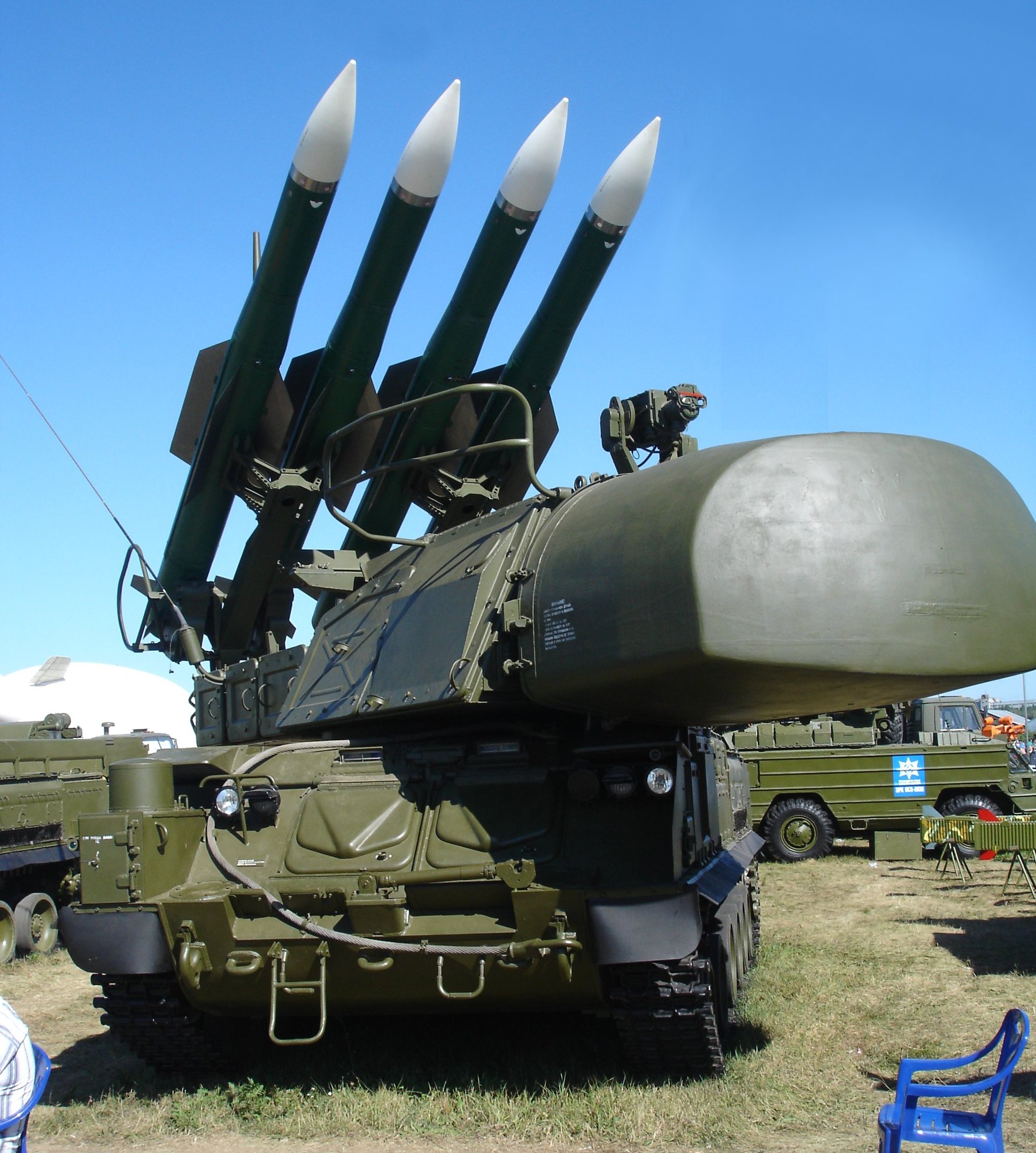
That the missile used to strike the plane was likely Russian-made is the one of the most dangerous aspects of this latest crisis. The Ukrainian government has been accusing Russia of supplying the rebel separatists in the east with advanced weaponry, including antiaircraft missiles, for weeks, and has been met with staunch Russian denials. Despite the accusations that the rebels or the Russians shot down the plane, representatives of the People’s Republic of Donetsk deny they can shoot down planes over 10,000 feet, and the Malaysia Airlines plane was shot down from 32,000. The rebels (and Pres. Putin) have accused the Ukrainian government itself of shooting down the plane, in an effort to earn the separatists international condemnation.

Yet one of the rebel leaders posted on social media Thursday that they had shot down a Ukrainian military transport, a suspected misidentification due to the similar colors in the Malaysia Airlines logo. Once the news broke that the plane was a passenger jet, the post was removed. The attack also came just one day after the US confirmed that Russia had fired its first missiles into Ukraine, and had imposed further sanctions on Russia as a result.

Given the climate of heavy suspicion against Russia and its separatist proxies in Ukraine, one can understand Putin’s call for peace talks this morning, as well as his direct request to the rebels that they lay down their arms. Yesterday, he had accused the Ukrainian government of the attack; today, he appears to have moderated his stance, but “did not address the key question of whether Russia gave the rebels such a powerful missile.”

Buk missile system, the suspected culprit.
One guess is, as has happened many times before in the US-Russia geopolitical struggle, Russia simply didn’t consider the consequences of arming a proxy war. Rebels often go against the wishes of their supposed masters, and it is difficult to control what inexperienced separatists will do with advanced weaponry once it has been given to them. It appears at this point that if the rebels did shoot down the plane, they did so believing that it was a Ukrainian military transport, of which they’ve already shot down two in recent weeks.

What is certain is that determining responsibility, while the first item on the international community’s agenda, will be difficult given the lack of access to the area. AP reports that to get to the crash site from rebel-held Donetsk, one must pass through five checkpoints with document checks at each. The confusion of the rebels who are currently grappling with an international incident with very little, if any, experience doing so, is apparent in the differing statements given by their representatives. While one reported this morning that no black box had been found, another said that eight of twelve recording devices from the plane had been recovered.

Compounding the tragedy are the three hundred lives that were senselessly lost in a conflict that most, if not all, had nothing to do with. More than collateral damage, their deaths represent the danger of arming proxy groups with such advanced and dangerous weapons, only to let them loose in another country. The victims included a large contingent of high-level AIDS researchers en route to an AIDS conference in Kuala Lumpur, and their deaths have caused an torrent of grief in the scientific community.


Whoever is responsible, the greatest danger now is that miscommunication or the lack of communication between the US and Russia will allow this international incident to spiral into regional armed conflict, one that would likely include Russia and NATO forces. Yet if Russia disavows the rebels, coaxes them into a cease-fire or peace deal, or even helps Ukraine to suppress them, this could be an opportunity to improve frosty US-Russian relations. If cooler heads are allowed to prevail, and a solution for the situation in the Ukraine can be found out of this tragedy, then the 300 lives lost will not have been completely in vain.

Tuesday, April 22, 2014

Did Diplomacy Win in Ukraine?

Not with a bang but a whimper, international tensions appear to have shifted away from the Ukraine, leaving regional powerhouse Russia and the interim government in Kiev to deal with what are most-definitely-not-but-kind-of-look-and-talk-like Russian forces in the east. Though the conflict certainly is not over, it looks like it will not be the likely cause of World War III anytime soon.

Russian-speaking troops are still occupying several areas in Eastern Ukraine and Crimea is firmly in Russian hands, but the US, EU, and Russia as well as Ukraine’s interim government came to an agreement to peacefully “defuse” the situation last week in Geneva. Yet Russia has not yet fulfilled one of its primary commitments to call on separatists in the East to surrender the buildings that they’ve occupied, and is now contemplating further military action.

Thursday, March 6, 2014

Crimean War Redux

By Guest Contributor Joel Klein
MA Candidate in International Affairs, Boston University


Kerry and Lavrov face off
Recently my fellow graduate student at BU and editor of this blog Vicky wrote an excellent piece on Russia’s invasion of Crimea. While a self-admitted non-expert on Europe or the Former Soviet Union her piece has some excellent analysis and is well worth the read. However as someone who aspires to be an expert on Russia and the Former Soviet Union I wanted to add my 2 cents partly as rebuttal but mostly to inform especially considering our media’s awful coverage. In many ways Vicky and I agree on the many of the United States foreign policy failures and problems in President Obama’s second term. I agree with Vicky’s Meta analysis, our grand strategy is non-existent and the second term National Security process is a disaster. I blame much of this on Obama’s poor second term national security team which possess few independent strategic thinkers.

What many are accurately calling Europe’s most dangerous crisis since the Cold War is a direct result of issues unsettled after the end of that particular “War”. This process along with recent blunders by the EU in particular, but also the United States and Russia, has brought us to this point. For this article I do not comment on these wider international relations issues but analyze the interests of Russia in initiating the Crimean crisis and the potential Western response.

Tuesday, March 4, 2014

Obama's No-Good-Very-Bad Week

As the crisis in Ukraine enters its fifth month since ousted President Viktor Yanukovych turned down an EU association deal in November, Russian troops have left their bases in Crimea and occupied the peninsula. Russian President Vladimir Putin claims the move is essential to protect ethnic Russians, who are allegedly at risk from militant nationalist, anti-semitic, and otherwise violent groups. While this claim is shaky at best, given Crimea’s strategic importance to Russia (whose Black Sea fleet is stationed at Sevastopal), it is not altogether shocking that Russia would move to secure the region in the face of growing instability in Ukraine.


What remains less clear are the options now open to US President Barack Obama in responding to the crisis. Wishy-washy and inexact condemnations and threats have left much to be desired, and many are already claiming that foreign policy is at an all-time low in Obama’s second term. One side of the aisle points out his weakness, while the other calls attention to the irony of this rhetoric. Yet few of these voices offer any tangible actions the President could take to diffuse the crisis, if not end it altogether. The following are some of the options the Obama administration has when it comes to confronting Russia on its recent incursion.

Monday, June 17, 2013

Does the G8 Still Matter?

The G8 summit, taking place this week in Northern Ireland, represents a yearly gathering of 8 of the world’s 11 most wealthy countries. Every year, world leaders from the Group of 8 meet to discuss primarily the global economy, but also pressing topics such as terrorism, world food supply, and this year, the Syrian conflict. Representing 50.1 percent of the world’s total GDP, there is no question that these eight countries hold more sway than most. Yet in the face of deep divisions between members such as Russia and the US, as well as the absence of China, India, and Brazil, does the G8 truly still have relevance in today’s world?