Tuesday, January 5, 2016

Drawing Battle Lines in the Middle East

While it has often been overshadowed by more pressing issues in headlines, the bellicosity Iran and Saudi Arabia have for decades shown one another is arguably one of the most pressing concerns for the region. The culmination of events over the weekend involving the two countries - Saudia Arabia's mass execution of 47 individuals including a prominent Shiite cleric, and the subsequent violent protests occurring at the Saudi Arabian embassy in Iran - underscore this point perfectly. Now the Middle East, a region already at the precipice of outright catastrophe, is in a particularly precarious position. What happens next between the two countries will reverberate across the entire Middle East and, in certain ways, the globe.

Saudi Arabia has long been a bastion of Sunni Islam while Iran, for decades the black sheep of the region, has been a home to Shiites, the minority of the two in the region. As far back as the Revolution in 1979, Iran and Saudi Arabia have been seen as bitter enemies, constantly attempting to one-up one another and choosing proxy battlegrounds along the way.

Two of these battlegrounds exist right now: Syria and Yemen. Since the uprising began in Syria five years ago, Iran has desperately attempted to help prop up President Asad, who is of a minority Shiite sect called Alawite. Unlike its leader, however, Syria is a predominantly Sunni state--giving Saudi Arabia entree into the conflict in an attempt to restore power to the majority religious population.

Anti-Saudi Arabia protest. Courtesy of WSJ

A civil war has similarly erupted in Yemen and continues to serve as a proxy battle for Iran and Saudi Arabia, who have taken sides. In a particularly decisive move, Saudi Arabia began conducting airstrikes and providing military support on a mass scale to the government of Yemeni President Abd Rabbuh Mansur Hadi. Iran, meanwhile, has been providing military and logistical support to the houthi insurgency, loyal to former Yemeni President Saleh, which has waged all-out warfare against the sitting government.

These battles have had lasting repercussions for the entire region--most notably the governance vacuums they have created in Syria and Yemen that have permitted the Islamic State to thrive. The emerging diplomatic conflict between Iran and Saudi Arabia may prove to be a much more urgent geopolitical issue, however.

Tragically, the disagreement comes just as progress was being made in Syria peace talks. Both Iran and Saudi Arabia have participated in multi-national talks in recent weeks, demonstrating the possibility of a preliminary agreement being reached in the coming months. Hundreds of thousands have died in Syria to date and much of the country has been reduced to rubble--it is well past time that a ceasefire was negotiated. Should tensions continue to flare between Iran and Saudi Arabia, however, it is likely that the scheduled talks in Geneva later this month will be put on hold--something the Syrian people cannot afford.

Secretary of State Kerry with Saudi King Salman. Courtesy of WSJ

The disagreement also has the possibility of undermining the Iran nuclear agreement that was signed last year. The United States has been placed in a precarious position: on one hand, President Obama is striving to improve relations with Tehran following the agreement in an effort to not only strengthen the agreement, but make Iran less of a hostile player in the region. Iran tests of ballistic missiles in recent weeks have caused distrust and stoked anger in the U.S. as well as Iran; the U.S. cannot afford any more issues. Saudi Arabia, however, is the leading ally of the U.S. in the region, and will see any warmth towards Iran as hostility towards themselves and a degradation of the relationship. President Obama must walk the diplomatic tightrope and ensure that both sides feel that they are being treated respectfully.

Finally, the disagreement has and will continue to affect the global oil market. Brent shares fell on Monday on news of Saudi Arabia's decision to sever diplomatic ties with Iran. With Middle Eastern countries producing so much of the world's oil, the reminder that it remains a highly volatile region will be unsettling to investors. Further, while Saudi Arabia has vowed to keep production high, any escalation in conflict that more quickly drains their monetary reserves will result in a halt of production, sending oil prices soaring and hurting American consumers.

As of today, Saudi Arabia, Bahrain, and Kuwait have all severed diplomatic ties with Iran following the protests in Tehran over the weekend. The United Arab Emirates has also downgraded their diplomatic ties. It is unclear how Iran will respond, but the United States is urging both sides to exercise caution moving forward. The entire region's stability likely depends on it.


Wednesday, December 9, 2015

A Pivotal Moment in Venezuela

In the largest blow to the late Hugo Chavez's Socialist Party since its founding in 1999, it was announced yesterday that Venezuelan voters had handed the country's opposition party a supermajority in the National Assembly. The Democratic Unity coalition will now have the power to name the president of the Legislature, approve or reject the government's budget, and even hold a referendum on the president's leadership, after 16 years of political imprisonments, a hostile Socialist majority, and overall oppression.

The victory is a striking bellwether indicative of the various crises Venezuela currently sees itself in: an economy on the verge of collapse, an impending shortage of food, and a devastatingly failed healthcare system. Former President Chavez's handpicked successor, Nicolas Maduro, has managed to hold on to power since he took office in 2013, but has overseen a country with an increasingly grim forecast virtually since then. With more than 70% of the electorate turning out to vote - a record in recent years - it is clear that the people of Venezuela are fed up and ready for a change.

President Nicolas Maduro with supporters. Courtesy of Yahoo


The question now is whether or not the Democratic Unity will be able to facilitate the change that Venezuelans so desperately need--and the reason they voted with such decisiveness. Venezuela's economy has been in a virtual free fall for months, primarily due to plummeting oil prices. Crude oil - by far Venezuela's most important commodity - has dropped 65% in the past 18 months, sending shudders around the globe but none more apparent than in the South American country. According to the IMF, due to this decrease, Venezuela's economy is expected to contract 10% and 6% in 2015 and 2016 respectively, with inflation over 100% for 2015.

Venezuela's healthcare crisis is arguably more acute. Thousands of citizens do not have access to even the most basic medical supplies and medicines, and in March 2015, the Venezuelan advocacy group Doctors for Health found in a national survey that 44% of operating rooms were not operational and an astounding 94% of labs didn't have the equipment or supplies necessary to be operational. They also found that 60% of basic medical supplies were either partially or wholly unavailable. According to Human Rights Watch, because Venezuela does not have a developed pharmaceutical industry, it relies on imports for most of its medicines, and has in the past several years planned poorly and mismanaged storage of medical supplies and medicines.

The healthcare crisis is only compounded by an increasing lack of food in the country. An August poll found that 30% of Venezuelans were eating just two meals a day, and that 70% had stopped buying basic food products because they were too expensive or unavailable. Like the healthcare crisis, Venezuela's food shortage has triggered protests - some turning violent - throughout the past year, with little in the way of a substantive response from the government.

Waiting on line for food. Courtesy of the Wall Street Journal


However, the Assembly does not have much influence over the economic policy of the country, and therefore, in addressing these crises. That power will remain in the hands of President Maduro, despite talk of new laws passed to spur economic growth, provide pensions for elderly currently without them, and the removal of finance cabinet ministers. President Maduro will be tasked with improving the economy, cutting oil production to stabilize the price, and incentivizing foreign direct investment and small business growth. He will be responsible for heeding both the cries from his citizens but also the recommendations from NGOs and advocacy groups, working to increase pharmaceutical imports while expanding the industry domestically, and resolving the food crisis immediately.

Above all, though, in order to truly reverse the economic malaise, the President and the Assembly will have to work together. The likelihood of that today appears scarce. President Maduro has vowed to fight the opposition with whatever it takes; likewise, the opposition won their election on the message that President Maduro and his party were broken beyond repair. Both must put their differences aside now and govern in a manner that is effective and restores the public's trust. Venezuela is in dire straits; there is no time for political posturing. A successful collaboration between the two will almost guarantee a step in the right direction for the country--something its citizens voted for, and something they are counting on.


Wednesday, September 2, 2015

Europe's Immigration Crisis

Over the past several weeks, migration to the European Union has been a topic dominating headlines as the countries of the eurozone remain bitterly divided over the next course of action. Due to unprecedented humanitarian crises in the Middle East and Africa, it is no surprise that Europe is facing an influx of refugees that they simply do not have the bandwidth to manage. However, as the death toll from failed migration attempts rises and E.U. members continue to bicker and avoid taking action, the crisis is going to worsen substantially. From a humanitarian standpoint, finding a solution that benefits these refugees is desired, but from a political standpoint, it is imperative.

The pace at which refugees are coming to European shores is indeed frightening--Germany claims it will be processing up to 800,000 this year, or four times the number it processed in 2014. This is a long-anticipated overspill from the Syrian civil war: countries that have supported refugees for years such as Lebanon, Jordan and Turkey, are now finding themselves at capacity and unable to provide safety and shelter to any more refugees (as my colleague Vicky has written, the conditions in these refugee camps are themselves not at all desirable or livable). Europe should have seen this coming for quite some time, but somehow, here we are, with the continent seemingly completely caught off guard.

Migrants on the Mediterranean 


And as record numbers of refugees come to Europe, they are dying in record numbers. The death toll is in the thousands so far this year, with specific events capturing the world's attention with their horrific details (ships sinking, suffocated bodies found in trucks, the list goes on...) This is now a very serious crisis that will make the E.U. look inhumane and embarrass them until steps are reached to resolve it.

What makes the situation even more dire is the fact that it is the countries with the most unstable economies and the weakest governments that bear the brunt of this influx. It is estimated that Greece has already taken in roughly 160,000 this year; meanwhile, this summer the country narrowly avoided bankruptcy by securing a last-minute bailout deal, just before Prime Minister Tsipras of the once-popular Syriza party resigned and called for new elections. Greece's own population remains destitute, with a staggering 25 percent unemployment rate (around 50 percent for young adults), unprecedented homelessness and a dearth of government services. In Italy, itself a struggling economy, there has been the arrival of more than 83,000 migrants.

Instead of support these countries inundated with refugees and simply unable to support their domestic populations as well as the newcomers, many European countries have simply turned their back in defiance. In the meantime, frightening anti-immigration nationalist political parties, predominantly in the nordic states and parts of Eastern Europe, are growing in popularity--a serious threat to the E.U.'s political stability. Germany has stepped up, as they are wont to do in these types of situations, bravely announcing that they will offer asylum to all refugees who make it to their borders. However, in response, Hungary shut down its train stations earlier this week, barring migrants from leaving without "proper paperwork."

Migrants waiting for a train in Hungary. Courtesy of Getty Images


The situation is rapidly turning into a nightmare, and something needs to be done about it. Germany has proposed a quota system that is spread out among states based on their ability to accommodate, but this has been met with a fierce backlash from anti-immigration countries who feel that being in the Schengen region does not require them to welcome anyone they don't want across their borders. The E.U. executives claim to have a new proposal ready to present later this week, but it is unlikely that any compromise will be agreed upon by the stanch opponents. The longer it takes to reach a deal, however, the worse the situation will be for not just Germany, Italy, and Greece, but for the entire E.U., and a very serious threat to the concept of the Schengen region.

But besides developing framework on how to handle sudden influxes in refugees (which should have been developed a decade ago, at least), the E.U. must begin to commit to better supporting the countries where these refugees are coming from. Humanitarian assistance and financial support would go a long way in Jordan, Lebanon, and other similarly situated countries. And with even slightly better living conditions and increased capacity for accommodation there, the number of refugees crossing into Europe each year might decrease to a more sustainable level. It is incumbent upon the members of the E.U. to work towards this type of collaboration.


Thursday, August 6, 2015

On the Anniversary of Hiroshima, a New Nuclear Crossroads

Today marks a somber anniversary, the 70th anniversary since the United States dropped the first of two nuclear weapons on Japan. Seven decades ago today, the US, ostensibly to end WWII in the Pacific, dropped a nuclear bomb on Hiroshima, followed three days later by a nuclear attack on Nagasaki. In the aftermath, hundreds of thousands of people died in the two cities, and over one hundred thousand were killed in the initial blasts alone. The nuclear weapons used in the attacks on Hiroshima and Nagasaki were comparatively small compared to the destructive power of nuclear weapons today, and they still devastated two large cities. Japan marked the occasion with speeches by the few remaining survivors, a national moment of silence, and the tolling of a bell.

Pres. Obama speaks on the nuclear deal at American University
The anniversary comes at a moment when the United States faces yet another nuclear crossroads: whether or not to enact a nuclear deal reached with Iranian negotiators on July 14. On one side stands the Obama administration, which negotiated the deal and hopes to pass it through a Congressional vote, despite significant, somewhat bipartisan opposition. On the other stand politicians from both sides of the aisle, although largely Republican, who say the deal will not stop Iran from obtaining a nuclear weapon, and argue that the US should continue the current sanctions regime in the hopes of obtaining a better deal. If such a deal never materializes, then armed intervention in Iran becomes an option.

Tuesday, July 7, 2015

No place to call home: Government of Jordan blocks shelter projects for Syrian refugees

This post was originally published on The Huffington Post and is reprinted here with the author's permission.

Mohammed's* house is falling down around him. Dampness and mold have invaded his walls, his roof is crumbling over his family's heads, and he desperately needs to fix it before winter arrives. The dampness is caused by improper insulation, as well as a bathroom built into the corner of his kitchen. A small window provides the joint toilet/shower's only source of ventilation, and it opens directly over the kitchen area, leaking not only moisture, but also the odor from an open squat toilet shared by nine people. The roof can be fixed with a concrete casing, the bathroom requires a door and outside vents, and the broken windows and doors must be sealed against the elements to stop the home's deterioration.

Mohammed cannot afford the necessary upgrades to his home because he is one of the nearly 630,000 Syrian refugees currently residing in the Hashemite Kingdom of Jordan. Of these refugees, 85 percent live outside of the country's refugee camps, and 99 percent lack a permit to work legally. Known as urban refugees, the greatest challenge they face when they arrive in Jordan's cities and towns is securing access to adequate and affordable shelter, especially without a legal source of income. Mohammed's troubles with his rented home are not unique, and tens (if not hundreds) of thousands of Jordan's urban refugees currently reside in substandard or inadequate shelters.


Sections of Mohammed's roof are falling away due to dampness and mold.

Urban refugees in Jordan consistently cite housing as their primary concern, and cash-for-rent and construction assistance from both domestic and international organizations provides a vital support system as refugees seek to reestablish their lives. But in Jordan, the government has suspended all urban shelter projects since early 2015, and organizations attempting to house Syrian refugees cannot even provide cash assistance, let alone make upgrades such as those Mohammed's home requires. As urban refugees struggle to pay rent, they are forced into substandard housing that threatens their families' health, access to education, security, and overall wellbeing.

I visited Mohammed's home in June 2015 with an NGO** that provides shelter assistance, among other areas of humanitarian aid. Due to the government suspension, NGOs in Jordan can only work within narrow confines to improve the shelter situation: they can continue education programs about housing and property rights, and they can perform home assessments like this one, in the hope that the suspension will soon be lifted and projects will resume. In total, between the repairs to the roof and broken windows and upgrades to the bathroom, Mohammed's house requires 900 Jordanian Dinars in funds (about 1,200 USD) to be considered habitable, albeit at a very minimal level. Ordinarily, the NGO would move forward to pay these upgrading funds in installments to refugee families or their landlords, to ensure that the money is spent on approved construction projects. Instead, due to the suspension, we leave Mohammed and his family of nine without promises, and without any idea of when or if the aid would materialize.


A combined kitchen and shower in a refugee home, where family members must bathe fully clothed because they do not have a shower curtain or separating wall.

The various Jordanian ministries reviewing the projects under suspension have not given a coherent reason for the sudden work stoppage. The suspension was imposed in early 2015 despite the fact that the same ministries approved all shelter interventions a few months prior, during the 2014-2015 government-led Jordan Response Plan (JRP) initiative. Some of the aid workers I spoke with think that the suspension continues due to disorganization within the ministries; others believe it is the result of a lack of political will to support shelter projects, or an unwillingness to suggest refugees may be long-term or even permanent residents of Jordan. All agreed that it is unlikely if not impossible that in a few months' time, the government had found such significant issues with shelter projects that they merited a full suspension.

Meanwhile, planning meetings for the next round of policy documents, JRP 2016-2018, have continued, and Jordanian ministries have yet to put forward any additional or alternative shelter strategies. Drafting documents is, of course, a much simpler and less politically fraught task than actually carrying policy through to completed projects, but the government has not even given a timeline of when or if organizations can continue their work this year.  As a result, donors have begun pulling funding for shelter projects, and a year of work has already likely been lost.

The UN High Commissioner for Refugees (UNHCR) and NGOs have been implementing and revising several approaches to shelter provision in Jordan since the refugee crisis began in 2011. The UNHCR provides funding to NGOs to implement projects, and cash-for-rent assistance to the refugees themselves. NGOs have various levels of focus on cash-for-rent aid, upgrading substandard shelters, completing unfinished construction projects, distributing sealing-off kits, and raising awareness about housing and property rights. For populations of urban refugees, shelter is the cornerstone of aid provision and wellbeing. A refugee's work, education, familial relations, water, food, hygiene, health, and personal security are all inextricably linked to shelter conditions. Without an adequate place to call home, other interventions can only act as stopgap measures, while the physical and psychological health of entire families suffers.

Shelter provision is politically contentious in a way that food, water, and other areas of emergency aid are not. Shelter and construction imply permanence, while domestic as well as international actors typically treat refugee populations as temporary, despite the fact that the average refugee crisis now lasts 17 years. Constructing or improving housing for refugees creates tensions with the host community as well as the host government, whose low-income citizens often live side-by-side with refugees but do not receive similar levels of aid. It is a complex situation, but by no means an unsolvable one, and the benefits of increasing the housing stock to Jordan's housing market far outweigh the costs of negative perceptions of aid and refugees.

There is currently a shortage of over 48,000 housing units in Jordan, and rising rent prices caused by the inadequate supply of homes negatively affect refugees as well as Jordanian nationals. Organizations responding to the refugee crisis in Jordan also work to increase the resilience of the host community, whether by educating Jordanians about housing and property rights, upgrading substandard Jordanian homes, or completing unfinished construction projects for Jordanian landlords. The suspension of urban shelter projects harms not only Syrians, but native Jordanians as well. As one aid worker put it, "The government is not shooting themselves in the foot, they are shooting themselves in the heart."

If the suspension is not lifted soon, the construction season will give way to winter, when priorities shift to sealing-off kits and winterization of homes. Mohammed is only one of hundreds of thousands of refugees and vulnerable members of the host community in need in Jordan, and under the shelter project suspension, homes like his will continue to deteriorate, leaving his family and others like it to suffer the consequences. The (insufficient) funds the UN and NGOs have received are not being spent, sending the message to donors not to fund shelter projects for fear of wasting precious aid dollars. NGOs whose primary focus is shelter may be forced to leave Jordan altogether, to move on to a country where their assistance is welcomed.


Vacant lots and unfinished construction projects are ubiquitous in Jordan, visible reminders of the housing crisis.

In Mohammed's house, the need to fix the roof, upgrade the bathroom, and seal the broken windows and doors before winter arrives is palpable. Even in the summer heat, the house is cool and damp, which will only grow worse as the cold and wet weather arrives. Without relatively minor improvements to the home, his entire family's health and security will be compromised, and the problems assessed during our visit will only grow worse. The roof itself could collapse at any moment from deterioration, and one of Mohammed's six children might be underneath it when that happens.

Mohammed's daughter Amena, seven or eight years old, follows us as we conduct the assessment. She peeks around her father's legs as he explains the problems in the home, shy around a group of strangers, but curious nonetheless. She and her siblings have been learning English, and a Playhouse Kids textbook lies open on the kitchen counter. The fridge is covered with flashcard magnets that give the English and Arabic words for different kinds of food, so that even when they eat, the children are studying. Amena's purple, sparkly t-shirt reads: "Smart Girl with Big Dreams." I can't help but wonder, growing up in such conditions, what will happen to those dreams if her family's home remains uninhabitable. Without an end to the government's suspension of shelter projects, children like Amena will need to find their own way to keep dreams alive in dark, damp, and dangerous homes.

Vicky Kelberer conducted research in Jordan in June 2015 with the support of the Boston Consortium for Arab Region Studies, a Carnegie Corporation project, and the Boston University Institute for the Study of Muslim Societies and Civilizations.

*The names of the refugees mentioned in this article have been changed to protect their identities.


**NGOs and aid workers requested anonymity, given the sensitivity of these issues.

Tuesday, June 2, 2015

The Greek Dilemma

After a lengthy negotiation period, it appears that Greece and its creditors may be close to reaching a deal on extending economic relief in the form of more short-term bailout packages to the struggling country. In the next two weeks alone, Greece owes billions of dollars to the IMF and other creditors--an amount it is nowhere near capable of paying on its own. The risk of a potential default is very serious, and creditors know that. All that is left now is for the terms of new bailout money to be finalized, and taken to the Greek government for a vote.

Greek Prime Minister Tsipras has lobbied hard for fairer terms in an effort to make good on the anti-austerity promises that swept him into office months ago, yet his success has been mixed as he confronts a reality in which Greece's unstable level of debt leaves it holding very few cards at the negotiating table. Any new deal will include cuts to Greek pensions, reforms to labor laws, and possibly reforms to Greece's tax system, notorious for its ineffectiveness at collecting taxes. However, PM Tsipras' left-wing Syriza party must accept these compromises with the understanding that such a deal may be the only thing preventing Greece from running out of money entirely.

PM Tsipras. Courtesy of Financial Times

The problem is that this is only a short-term solution to a much larger issue--and that it may not be the right solution at all. It has become generally accepted that austerity is not the right way to help a struggling economy. Drastically cutting government spending during a period of high unemployment is only going to perpetuate unemployment, not help consumers get back on their feet and spend more. And with Greece's unemployment rate hovering around 25 percent - and much higher for youth - more austerity measures are going to hit the public hard.

Further, this isn't to say that there won't be a Greek exit from the Eurozone farther down the road. Greece's debt-to-GDP remains around 175 percent (compared to Germany's, which is less than 80 percent). Between paying back its creditors and paying bills at home, Greece is just barely staying afloat. Short-term loans will help stabilize the Greek economy temporarily, but what's to say that Greece needs another bailout months later?

A Greek exit would be catastrophic not just for Greece, which would have to revert to its (now extremely devalued) drachma currency, but would pose an existential threat to the Eurozone itself. If Greece exits, Italy may see an opening and exit as well. Spain is struggling nearly as badly as Greece and Italy, and would perhaps consider the same decision. Ultimately, Greece could set the stage for an exodus of damaged economies and a potential collapse of the euro as the currency for the EU.

Courtesy of WSJ

This crisis has been years in the making. The thought that countries with as much diversity in culture and financial stability as those that make up the EU could come together and operate under one set of financial guidelines is absurd. Sure, the U.S. dollar works well for all 50 states in America, but that is because they report to one federal government--not more than a dozen, as is the case in the EU. What a country like Germany and a country like Greece need in terms of economic policy are far too varied--yet they lack the flexibility to adopt policies that will benefit them. It is hard to see how the Eurozone can rebound when this is the case.

Yet at the end of the day, what is Greece to do? Unfortunately, there are simply no other options left than to take the money it is offered and pay what it owes. Whether it is the solution Greece needs is not the point--it is the solution Greece has, and the solution it must use. However, as loans are repaid, towns and cities all over Greece will likely look the same: scores of working-age citizens sitting in cafes without work, shuttered storefronts, and an ever-increasing disillusionment with the economic union and currency Greece adopted more than a decade ago.


Tuesday, May 19, 2015

The Iranian Nuclear Agreement: What Does it Mean for US Diplomacy and International Trade in the Middle East?

Photo by United States Department of State (Public Domain)
On April 2nd, the members of the P5+1, the European Union, and Iran reached an agreement on the framework for a Joint Comprehensive Plan of Action (JCPOA) regarding Iran’s nuclear program, outlining a set of parameters for a final agreement to be drafted by June 30th. Although a final comprehensive deal palatable to all parties will prove to be difficult, this framework agreement marks a milestone achievement in negotiations that have spanned over a decade. The nuclear accord faces resistance, however, by lawmakers in both the US and Iran, as it would require a broad leap of faith between two countries that have been at odds for over thirty years and have competing national interests in the region. An agreement with Iran would also call into question existing US alliances in the Middle East and lead to increased Russian influence in the region.

News of the agreement evoked mixed reactions from US lawmakers, with the Senate drafting a bipartisan bill that would allow Congressional oversight on the final deal. President Obama agreed to sign the existing bill, allowing a hold on lifting sanctions during a 30-day congressional review of the final accord. Nevertheless, both President Obama and Secretary of State John Kerry stated that they would not allow Congress to stand in the way of the best deal possible.

Many US lawmakers are hesitant to believe that the Iranian government will abide by its obligations under any agreement regarding the nuclear program, and their mistrust was exacerbated by the discrepancies between the fact sheets issued by the US and Iranian governments regarding the framework agreement.

The US fact sheet states that Iran will reduce the number of installed centrifuges to 6,104 IR-1s (Iran’s first-generation centrifuge) to lengthen Iran’s breakout time to one year (versus 2-3 months). Furthermore, IAEA inspections would be conducted on all of Iran’s nuclear facilities, and access would be provided for UN inspectors to examine suspicious sites and investigate any allegations of covert facilities. Should the IAEA confirm that Iran has held up its end of the final comprehensive deal, US and EU nuclear-related sanctions would be suspended. The framework also references a restructuring of UN Security Council resolutions in order to lift the past resolutions regarding the nuclear issue. Yet, other US sanctions and UN resolutions related to terrorism, ballistic missiles, human rights violations, and cargo inspections would remain in force.

Contrary to the US fact sheet, Iran’s fact sheet states that sanctions will be lifted at the time of the agreement, Iran will keep operating 10,000 centrifuges and not allow inspections of military sites, the Fordow site will continue enrichment activities, and the limits on the nuclear program will remain in effect for only 5 years.

Iranian President Hassan Rouhani acknowledged that drafting the final deal would prove to be the true hurdle of the negotiations, but highlighted that the advancement of negotiations to this late stage reflected an international commitment to the process. Meanwhile, other Iranian politicians expressed their frustration with the reaction from Congress and Iran’s lack of recourse should the P5+1 fail to meet their obligations under the deal. Analysts in the US remain optimistic that all parties will come to a deal through “creative negotiations” and speculated that the Iranian fact sheet was prepared by Iranian hardliners in response to the proposed US Congressional review of the agreement.

The framework agreement currently enjoys broad support from Iranian civil society as it promises the possibility of sanctions relief and economic growth. Sanctions relief should stabilize the foreign exchange rate and inflation, boost foreign private sector investments and domestic job creation, and increase foreign trade as businesses anticipate a sharp rise in economic and financial activity. Resuming oil production and exports will increase Iran’s hard currency revenues and should theoretically also revitalize its economy. This will ideally entrench the power of Iran’s moderates upon whom rest any hope of positive US-Iran relations in the coming years.

The prospect of a nuclear deal seemingly threatens Saudi Arabia, who believes that positive US-Iranian diplomatic relations and sanctions relief will lead to Iranian crude exports driving down oil prices and revenues, and fears that its long-standing alliance with the US will be in jeopardy. A change in oil prices is unlikely, however, as analysts believe that, while Iran should be able to export up to 500,000 barrels of crude oil per day by early 2016, the steady increase in global demand for oil should prevent this influx from impacting prices.

Despite Saudi fears and the fact that improved US-Iranian diplomatic relations will allow for cooperation against certain regional threats like the Islamic State in Iraq and Syria (ISIS), the US is not likely to drop its alliance with Saudi Arabia. Iran’s aid to Houthi rebels in Yemen has been detrimental to both the United States and Saudi Arabia, which has led to the US providing logistics and intelligence support to the Saudis.

The current Saudi campaign in Yemen is more than likely a show of force, intended to both distract from the nuclear deal negotiations and to remind the US of its existing alliance in the region. As a result, Saudi Arabia will likely scale back its campaign in Yemen once the nuclear deal is finalized. The current situation, however, exemplifies the contradictory interests the US will have to consider in the region for years to come should the nuclear deal come to fruition.

A nuclear deal also promises greater direct Russian influence in the Middle East through resumed trade relations between Russia and Iran. Naturally, US and Israeli lawmakers are suspicious of this relationship, as it brings the competing interests of another major world power into the region. The framework agreement has already prompted Russian President Vladimir Putin to lift a five-year ban on the delivery of the S-300 air defense missile system to Iran by the end of the year. Russia and Iran had agreed to the $800-million contract in 2007, but the delivery had been suspended in 2010 under strong objections from the United States and Israel. Iran hopes to receive the S-300s by the end of the year, but Nikolai Patrushev, head of Russia’s Security Council, noted that manufacturers needed at least half a year to complete production. Russia’s Foreign Minister Sergey Lavrov expressed his country’s interest in the success of this nuclear agreement with Iran and the lifting of all sanctions, stating that “[Russia is] confident that de-escalation of tension around Iran will improve bilateral trade-and-economic ties and, correspondingly, will be beneficial for Russia.”

Thawing the icy relationship between the US and Iran that has persisted for the past 36 years has vast implications for future diplomatic and trade efforts. Whether or not the nuclear deal could bring stability to this historically turbulent region remains to be seen, but at the very least, the opportunity to negotiate with Iran as a legitimate state actor instead of dismissing it as a rogue state opens the door to diplomatic approaches to the bigger issues in the region: the sectarian fighting between the Sunni and Shia populations in Syria and Iraq, the Houthi uprising in Yemen, and the relationship between Israel and its Arab neighbors. The real challenge will be bringing to the negotiating table competing regional interests and finding diplomatic solutions to these problems.

This article originally appeared on Ramen IR, an international affairs blog.

Monday, April 13, 2015

The Failures of Hashtag-tivism: #NousNeSommesPasGarissa?

Less than two weeks have passed since an Al-Shabaab attack on Garissa University in Kenya claimed 148 lives, largely students of the university, and already Kenya has faded from the headlines faster than you can say “Je Suis Garissa.” The attack raised fears of further strikes in Kenya, however, and a power transformer explosion mistaken for a terrorist attack at the University of Nairobi over the weekend caused a stampede that killed one and injured more than 100.
Kenyans mourn the victims of the Garissa attack.

This is the second major Al-Shabaab attack in the last two years, and the worst since the Westgate Mall attack in 2013 claimed 67 lives. A smaller Al-Shabaab attack on a quarry near the border last December also killed at least 36 people. Al-Shabaab is an Al Qaeda-linked terrorist group operating out of Somalia that grew out of the Islamic Courts Union, a relatively stable central government that was kicked out of Mogadishu by an international intervention in 2011. Al-Shabaab has been targeting Kenya ever since the country joined the African Union peacekeeping force in 2011, and transformed from a governing body into a terrorist group.

Thursday, April 2, 2015

It’s Just Africa: Democratic Elections in Nigeria Bring Back a Former Military Ruler

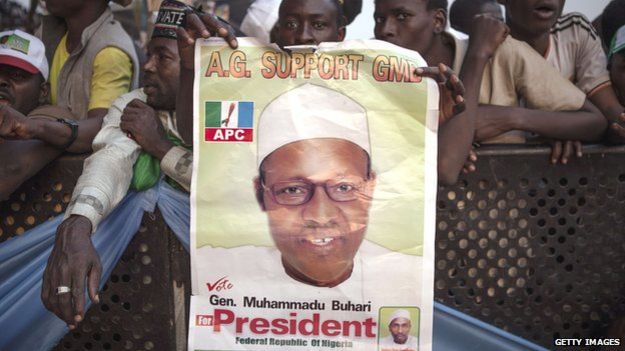
A historic election in Nigeria brought to power former military ruler Muhammadu Buhari, ousting incumbent Goodluck Jonathan. For the first time in Nigerian history, democratic elections led to the ruling party conceding victory to an opposition party. General Buhari was declared the clear winner by more than 2.5 million votes over his rival, and outgoing President Jonathan, whose party held power for the past 16 years, conceded by phone on Tuesday. He offered best wishes to his successor, urging his supporters to “use due process” to express any frustrations with the new government.

Thursday, February 26, 2015

Sucks to Be U(kraine)

Ukrainian leadership must be very weary these days.

It was reported yesterday that Russia has again escalated its conflict with Ukraine by threatening (again) to cut off gas supplies within the next two days if Ukraine cannot pay Gazprom, the Russian energy giant, what it owes. As fighting rages on in the east, winter rages on throughout Ukraine and Europe - natural gas is literally vital to the survival of many throughout the next several weeks. The natural gas dilemma also constitutes a severe economic threat to Ukraine, who has banned the purchase of foreign currency as its own continues to slide. Ukraine's economy is hanging on by a thread these days; any disruption in energy supplies would be catastrophic. Europe, too, is not in the most secure of financial positions - particularly the eurozone. With much of Western Europe's natural gas supply coming from Russia in pipelines that run through the Ukraine, they stand with as much to lose as Ukraine itself.

Courtesy of Telegraph

Perhaps most frustrating about Russia's threat is that the Ukraine alleges it prepaid months ago a sum large enough to cover their natural gas supply through the whole winter. So where is the discrepancy? It lies in Eastern Ukraine, which has been controlled by pro-Russian separatists for months. Russia has been pumping gas directly to the separatists through different pipelines in order to keep them warm as they serve as proxies in the fight to shatter Ukraine's sovereign borders. Russian President Putin is calculated in doing this: he can support those loyal to him across the border, without having to financially support them. All he has to do is argue that the region is technically part of Ukraine, so the energy supplied there comes out of Ukraine's budget.

Meanwhile, most likely according to Putin's plan, all of Europe is slowly destabilizing. Lithuania yesterday reintroduced conscription, out of fear of Russian aggression spilling over into its borders the way it did Ukraine's. Lithuanian leaders estimate adding 3,500 or so additional soldiers to their army each year, at least for the next five years. While not instituting a compulsory policy like their neighbor, Latvia has also pledged to ramp up its military spending and bolster its armed forces in the event of Russian aggression. If nothing else, the conflict in Ukraine has put the entire former Soviet bloc on edge as it creeps closer to an all-out armed engagement. Russia's unpredictability has only exacerbated anxieties.

And yet, the separatists in Eastern Ukraine march forward, this time to the port city of Mariupol. Should this be their destination, it would mark a significant shift in the conflict - Mariupol is on the way to Crimea, and it would indicate that the separatists are making an effort to carve out a path connecting their stronghold farther up north to the annexed Crimea. France's foreign minister has already warned Russia that this would be a red line, suggesting a retaliation of some sort, although this is a weak threat considering the fact that the conflict has lasted months without any direct military intervention from the U.S. or any European country. Should Ukraine fail to secure Mariupol, it's hard to see any real, effective response from the west.

Courtesy of Reuters

So what is Ukraine to do? For starters, it's time to give up the east.

This is a frightening suggestion, one that seemingly defies the logic that has kept the developed world relatively conflict-free in the 21st century. And there are major downsides - most notably, that it will be giving Russia what they want, and incentivizing similar action in other corners of the former Soviet bloc. But it is a necessary action, one that will mostly free Ukraine from conflict while stabilizing their economy.

As mentioned earlier, Russia has effectively equipped rebels in eastern Ukraine and enabled them to successfully fend off Ukrainian soldiers, while placing the entire financial burden of the roughly three million who live in the east on the shoulders of Ukraine. This is too large a burden for a country that is just barely remaining out of the grip of default, and undermines their military's position in the region. By ceding the region to Russia, the separatists will become Russian citizens; the three million that live there will look to Russia for financial support, and it will no longer be possible for Russia to wage conflict in Ukraine under the thin veil of the separatists being "Ukrainian citizens". Now, this is one belligerent nation attacking another - something that would garner a much swifter, and severe, response.

Ukraine will also be able to slowly allocate their meager finances elsewhere, such as industrial development (importantly, development that no longer relies on the fossil fuels Russia has stockpiles of), economic development, and independent energy supplies. This will be a long and difficult journey, but with the proper finesse, Ukraine can shift its economy and reach a modest stability that will allow for job growth and better ties with the eurozone. When (if) the conflict dies down entirely, foreign investment can accelerate this growth.

Courtesy of BBC

This is not a panacea, however. In the meantime, Ukraine and the rest of Europe must find alternative sources of energy in an effort to release themselves from the influence of Russian energy. Winter is far from over, and if Russia makes good on its promises to stanch the flow of natural gas, no amount of territory Ukraine cedes will save it from a humanitarian epidemic of unfathomable proportions. Energy must be sourced from Scandinavia, the U.S., and, if possible, the Middle East.

And finally, Europe and the U.S. must ramp up their support for Ukraine. There is a difference between neoconservatism and the war-mongering associated with it, and a calculated approach at how to support a struggling military that is defending itself against a truly existential threat. Great Britain pledged 75 military advisors to Ukraine, which is a great start. But until more arms are provided, and, more importantly, there is more humanitarian support from those who can afford it, Ukraine will continue to be on what appears to be the losing side of this conflict.

Ukraine has been at a crossroads for some time now. This conflict has killed thousands and is emerging as one of the greater crises Europe has seen since the breakup of Yugoslavia decades ago. The status quo is decidedly not working. Without a dramatic change in the strategy and overall goals of Ukraine and western Europe, nothing but a bleak 2015 (and probably longer) awaits, as Russia fortifies their foothold in Ukraine, potentially expands their aggression elsewhere, while the economies of the west erode.

Tuesday, February 24, 2015

When Idealism Collides With Reality

Alexis Tspiras, the figurehead of the Greek Syriza party and newly elected Prime Minister of Greece, campaigned on anti-austerity policy that seemed almost recalcitrant - much to the chagrin of the eurozone, and the praise of the Greek public. Since the collapse of the euro during the global financial crisis years ago, Greece's economy has just barely kept its head above water; today, the country's debt is roughly 175% of their GDP, and unemployment remains at an astounding 25% for the working age population and nearly 50% for youth. Bailouts from the Central Bank, IMF, and other creditors have required extreme austerity measures for Greece, which has exacerbated and even created the social inequality and what leaders in Greece have begun to call a "humanitarian crisis." These issues gave rise to the anti-austerity sentiment that Prime Minister Tspiras used to propel himself into office recently. Based on the sweeping support his party received, it is apparent that the public is ready for a change from the harsh austerity it has endured.

That change will not be coming anytime soon, however - at least not as dramatic a change as Greece has hoped for. Prime Minister Tspiras' rhetoric alarmed creditors, and it has taken weeks for Greece to reach a compromise on reform plans that continue certain austerity measures in order to continue receiving bailout funding. This comes after talk of a "Grexit", or Greek exit from the eurozone, which would likely have had catastrophic effects on both the Greek economy and the eurozone's economy. Both sides have worked hard to ensure that this does not happen.


These compromises - tax reform, better regulation of smuggled products, etc. - are a major political blow to Syriza and Prime Minister Tspiras. This is not the anti-austerity his constituents wanted. In the battle between idealism and reality, idealism seldom wins, and it has certainly not won in this instance. Greece will live to fight another day, however, and that's what matters.

Reality should play a larger role in discussions about the eurozone as a whole, though. The notion that multiple countries with wildly different cultures, languages, and most important, economies, can share a currency is irresponsible at best and dangerous at worse. It is simply too difficult to manage a currency when you have a spectrum of economies that ranges from Greece to Germany (which has nearly full employment today). Just because the eurozone has staved off a Greek exit and economic catastrophe does not mean such catastrophe is not inevitable.

Real reform - reform that puts the European economy on the right track - involves a comprehensive overhaul of the eurozone and the way the Central Bank functions. Greece may have avoided the financial apocalypse for now, much to the disappointment of Prime Minister Tspiras and his constituents, but a bandaid on a gunshot wound is not an effective policy going forward.

Wednesday, February 18, 2015

Apocalypse Now: Islamic State's Real Strategic Goal

Forty-five people burned alive in western Iraq. Twenty-one Egyptian Coptic Christians beheaded by the sea in Libya. Five Western aid workers and journalists executed, one Jordanian pilot incinerated, and two possibly related terrorist attacks in Western Cities. All in addition to the tens of thousands  of victims killed or forced into displacement by fighting in northern Syria and Iraq. If Islamic State is seeking to bring about signs of End Times, they are doing a pretty good job. Increasingly, policymakers are forced to take seriously the Islamic State’s self-declared mission: to bring about the Day of Judgment by sowing chaos in the world in the lead-up to the return of the Mahdi.

The Four Horsemen of the Apocalypse ride Toyotas, who knew?
The only thing more terrifying than a power-hungry Islamic State that uses scripture as a pretext for brutality is one that actually believes in it. While Al Qaeda’s stated goals were largely ones of retribution against the West and its allies for perceived injuries to the Muslim-majority world, the Islamic State's doctrine has confounded policymakers due to its seemingly earnest belief that the apocalypse – and thus paradise for true believers – is at hand, and indeed can be pushed along by worldly deeds. Drawing upon Koranic texts that suggest the End Times will be signified by a battle between the armies of “Islam” and “Rome” in northern Syria (in the town Dabiq, which Islamic State already controls and has named its journal after), the Islamic State strategy of directly goading the United States into intervening in Syria and Iraq becomes much more rational. By drawing the US into battle, Islamic State would have its “Army of Rome.” And defeat of this army is just the first phase of the apocalypse.

Thursday, February 12, 2015

Obama's New AUMF Lacks Much Needed Oomph

Yesterday, in a letter to the United States Congress, President Obama formally requested an Authorization for the Use of Military Force (AUMF) in the fight against the Islamic State. Obama has been operating under and defending the current strategy against ISIS as within the scope of the two AUMFs passed under President Bush: the 2001 AUMF, which authorized combat operations in Afghanistan, and the 2002 AUMF, which authorized the Iraq War from 2003-2011. The President has sufficient authority as the Commander-in-Chief of the Armed Forces to conduct the current operations against ISIS, but opposition has grown louder in the face of the terrorists’ expansion into Syria.

The AUMF proposed by the Obama Administration limits authorization to three years, thus avoiding embroiling the US in large-scale ground combat operations with no end in sight, which was the case with the operations in Afghanistan and Iraq. The President’s AUMF does not address the enduring 2001 and 2002 AUMFs and while it restricts the use of ground combat operations, it also excludes existing ground troops (ex. the US military personnel currently in Iraq) from these restrictions. This AUMF would allow the President to deploy new military personnel in the roles of intelligence collection and sharing, advisers, special operations forces, combat search and rescue personnel and Joint Terminal Attack Controllers to assist US air strikes. Lastly, this AUMF would sunset the 2002 AUMF, but not the 2001 AUMF, as the latter serves as legal justification for the broader war on terror.

Two aspects of this proposal are striking: it commits President Obama’s successor to operating under its terms for at least the first year of office; and it also does not significantly expand existing efforts against ISIS in any way. The proposed AUMF seems to lend political cover to ongoing operations against ISIS, which are comprised primarily of targeted airstrikes and operations against ISIS under Operation Inherent Resolve. This strategy has also placed upwards of 1,400 US military personnel in Iraq and costs on average $8.4 million per day.

The current strategy, according to President Obama’s announcement last September is to “degrade and ultimately destroy” the Islamic State. The new AUMF proposes a continuation of this strategy, even through our current efforts seem to be yielding very little in the way of military gains against this fluid enemy. The existing military operations against ISIS will not accomplish the intended goal of annihilating the terrorist group as it has proven much more dynamic, adaptable, and better funded and staffed than previous threats.

Containing, let alone defeating, ISIS will require a robust and much more comprehensive military effort, which is possible under the terms of the current AUMF, but which may not necessarily be palatable to the American public. The new AUMF promises to prevent another open-ended military commitment to the region, but perhaps also promises to prevent significant victories against this terrorist outfit.


Thursday, February 5, 2015

Crisis Time for Ukraine

There is a new sense of urgency in Ukraine this week, as a major rebel offensive has shattered the five-month ceasefire agreement and brought the death toll up over 5,000 since the conflict started some nine months ago. Ukraine finds itself in a difficult position, as it struggles on two separate but completely related fronts: their floundering economy, and their military-occupied sovereign territory. Without major successes on both fronts, Ukraine may find itself in a dangerous position in weeks to come.

Earlier this week, the United States made headlines on the subject when President Obama suggested that he was considering delivering defensive weapons to Ukraine in order to assist in their fending off rebel onslaughts. This is a major new development, and indicates that there are very real concerns on the part of the Western world when it comes to the security and the stability of Ukraine. Months ago, there wouldn't even have been a debate on whether military assistance was necessary; today, it is a very real possibility.

Russia is understandably unhappy with President Obama's musings. The Kremlin has stated that any military support of Ukraine by Western countries would be perceived as a direct threat to Russia - a hypocritical statement from a country that used its military force to "liberate" part of Ukraine's sovereign territory just months ago, instigating the entire ongoing conflict. However, Russia's warnings should be taken with more than a grain of salt. Despite ramped up sanctions, Russia's ruble has stabilized, and while oil prices remain at unusual lows, it seems as though Russia may actually be able to weather their financial malaise.

The Ukraine, on the other hand, is having serious economic troubles. The hryvnia plummeted earlier today following decisions by the Ukrainian Central Bank to raise interest rates. Foreign reserves are at virtually an all-time low, and with the war raging on, Ukraine's bank accounts are draining. They need to stabilize their currency and get their finances in order quickly if they have any chance at avoiding a major default or forfeiting the war due to lack of money.

Because of this, there has been a renewed effort from the rest of Europe to broker a peace deal, and fast. Leaders from France and Germany were in Kiev today laying out the conditions of a new peace agreement that would hopefully put an end to the conflict - at least temporarily. Secretary John Kerry was also present, and while not an author of the peace deal, put American support behind it. This peace deal may be a last-ditch effort, and the significance of it is not lost on Ukraine. Without some sort of renewed ceasefire in the coming weeks, should the conflict intensify, Ukraine will find itself gasping for air and desperate from support from the U.S. and others that perhaps may never come.

Tuesday, January 27, 2015

A Tale of Two Abdullahs

Look at that face. Look how benevolent he looks.
As world leaders including Pres. Obama streamed into Riyadh this weekend to pay their respects to the late Saudi King Abdullah bin Abdulaziz, the obituaries and op-eds that emerged painted two very different pictures of the deceased monarch. On the one hand, world leaders and some foreign policy analysts called the king a reformer who sought “discreet” changes for women including a pledge to allow them to vote and run in 2015 municipal elections, and who sought “stability” in the region as a whole. In such analyses, Abdullah was a benevolent dictator whose moderate policies struggled to find a place in a conservative society.

On the other, Abdullah’s less-publicized regressive policies come to the fore as examples of his autocratic tendencies and refusal to make real changes in the lives of most Saudi citizens. Despite some advances for women during his rule, his policies towards female rights and activism remained woefully medieval. Four of his 15 (or so) daughters have been held under house arrest since 2002 for speaking out about the deplorable state of women’s rights in the Kingdom. Women continued to be prosecuted and cruelly punished for personal indiscretions such as (alleged) adultery, divorce, and even having a boyfriend. The country’s large population of foreign domestic workers and stateless people enjoy virtually no rights, and yet are often held to account under Saudi law by the regressive justice system that is almost certain to find them guilty of alleged crimes. Countless activists, bloggers, human rights lawyers, LGBT citizens, and stateless people have been arbitrarily detained, tortured, and executed in brutal fashions (although one could argue that all execution is brutal) under Abdullah’s rule. While Abdullah’s publicists did a very good job lauding his “reformist” policies, surely the examples to the contrary outweigh his supposed reforms, many of which were largely window dressing on a dictatorship that insists on the suppression of any hint of dissent.

Monday, January 12, 2015

It’s Just Africa: Boko Haram Raids a Multinational Military Base

In October of last year, my colleague Colin wrote with guarded optimism about the ceasefire between the Nigerian military and the terrorist group, Boko Haram, questioning whether this news was actually too good to be true. In the months following that announcement, we’ve come to see that our cynicism was unfortunately well placed.

In November, Boko Haram’s leader, Abubakar Shekau released a video in which he denied any claims made by the Nigerian government about the outcome of ceasefire, explicitly stating that the 200 kidnapped schoolgirls from Chibok had converted to Islam and been married off.  This video dealt what could been seen as the final blow to the legitimacy of the statements coming from President Goodluck Jonathan’s administration. Criticisms of this administration grow more vocal and more numerous, as analysts say that the only solution to Boko Haram’s attempted takeover of the Nigerian state is a military solution. 

Boko Haram will stop at nothing in its advance through and out of Nigeria, and appeasement will certainly not end the violent rampages. If the Nigerian military were to pull back and effectively cede control of the territory the terrorist group already controls, it would only serve as incentive for the group to attack more towns and regions and expand its control.

Sunday, January 11, 2015

Charlie and Ahmed: Two Sides of the Fight against Violent Extremism

The attacks on the Charlie Hebdo office and kosher market in Paris that left 17 dead this week defy human language: words like unthinkable, unconscionable, inhuman, and barbarous simply don’t go far enough to describe the shock and sorrow felt by people all over the world. Thankfully, it is unimaginable to most people to commit such heinous acts of violence against a group of people simply for drawing a cartoon or writing an article. Whatever your opinion of the “offensive” work of Charlie Hebdo, most voices seem to be in agreement that no one deserves to die for causing offense. (Most.)

Yet as shocking as the attack is, it is not all that surprising. That it occurred in the middle of Paris, a Western city in a Western country, is slightly out of the ordinary for a contemporary terrorist attack. Much more often, we read about attacks from the supposed safety of Western communities as Islamabad, Baghdad, Kabul, Aleppo (and on and on) burn and bleed. This type of terrorist attack (akin to small-scale urban warfare) is growing more commonplace nonetheless, and attacks like the ones in Paris this week and the Boston Marathon bombings show that the West is far from immune from extremist violence. The growing pains (to put it mildly) felt by European nations as they struggle to forge common bonds among citizens from diverse backgrounds speak to similar struggles in the Muslim-majority world to bridge communal divides. Regardless of their vastly different political landscapes, efforts at integration and harmonization have similar effects in both regions: usually division, sometimes violence.

Wednesday, January 7, 2015

Europe's Balancing Act Between "Islamisation" and Xenophobia

Overnight in local time, two gunmen entered the Paris headquarters of Charlie Hebdo, a French satirical newspaper, and commenced a shooting rampage that would ultimately leave 12 dead. According to the Paris Prosecutor, the gunmen shouted "Allahu Akbar" and claimed to be "avenging the Prophet". Not coincidentally, Charlie Hebdo has a long history of publishing anti-Islam cartoons: in 2011, their headquarters was bombed following the publishing of a cartoon depicting the Prophet Muhammad. And, as notable artists such as author Salman Rushie have learned in the past, radical Islamics take these criticisms of Islam very seriously, and often seek violent retribution. In this case, in what President Obama has called a "cowardly" attack, the reverberations are being felt around the world as the notion of freedom of speech is put into question.

Protestors with signs that read "I am Charlie". 
Courtesy Daily Mail

There is a much larger issue at hand, though, and it is that of the broader effect of a booming Muslim population in Europe. Muslims now make up a majority in more than one European country, and currently make up more than 6% of the total European population. It has been estimated in recent years that the Muslim population in Europe will double by 2020. And the Muslim influence is being felt across all of Europe, no longer just in Turkey and other southeastern European nations.

Diversity is often a step in the right direction, and the integration of different peoples is generally a good thing. In Europe, however, there have also been some negative ramifications.

Xenophobia has become rampant throughout the European Union, especially in some of the Scandinavian countries in the north. This is not just directed at Muslims, although since they make up a substantial portion of immigrants traveling to Europe, they certainly bear the brunt of it. Xenophobia has become such a common sentiment, in fact, that parliaments and governments all over Europe have been increasingly susceptible to the influence of far-right, conservative parties that often have the backing of the general public. Holland's PVV party continues to enjoy mass popularity, despite its leader being on trial for exacerbating racial tensions and inciting racial hatred. It is these political parties that espouse the notion that immigration is bad, and that it is these outsiders that put native Europeans at risk.


Unfortunately, these sentiments are beginning to spread beyond the far-right, and are entering the mainstream at an alarming rate. In Germany, for example, there have been weekly anti-Islam protests since last October. The protests, organized by a group known as Pegida, have grown to include as many as 20,000 individuals in instances and continue to garner support as they speak out against the "Islamisation" of Europe.

Aside from Turkey, France has the largest Muslim population in Europe, and with it, the most anti-Islam sentiment and xenophobic tension. Their history if Islamic terrorism dates all the way back to the 1995 metro bombings - there have been numerous incidents since, including today's.

Alas, European nations find themselves in an awful catch-22: jihadist Muslims will continue their bombings, shootings and other attacks in European cities in response to anti-Islam sentiment and criticisms like the cartoons Charlie Hebdo published; in return, xenophobia and anti-Islam sentiment will only broaden. This problem is especially acute right now, as Europe remains the primary recruitment zone outside of the Middle East for jihadi fighters to join the wars in Syria and Iraq. Countries such as Denmark have tried to be innovative in their efforts to rehabilitate known jihadi soldiers as opposed to jail them, but this social experiment will need some time before its efficacy can be determined.

So what is Europe to do, then? The answer lies in integration. While the Muslim population has continued to grow, at tremendous rates in some countries, there has never really been much of a welcome for them in these countries. It can easily be argued that the number of Muslim politicians is woefully smaller in proportion of the Muslim population, meaning they are probably not getting the adequate representation they need in order to feel more at home. And in countries such as France (and, although I haven't done the research, probably others), laws have been established that contradict with Muslim traditions, such as France's ban on women covering their faces with hijabs in public. It is precisely because of this lack of a welcome that Muslims find it harder to assimilate into European culture. Without this assimilation, they probably perceive themselves more as outsiders than anything, and it's been widely documented that it is this very psychology that makes it far easier for someone to justify the use of violence on a broader community.

Now, obviously, lone wolf attacks such as today's are not indicative of a broader population, and shouldn't be. Just because a handful of terrorists attack Europeans does not mean all Muslims share that sentiment. It does, however, give us a reason to talk about the broader issue of xenophobia and the inclusion of Muslims into the European community - something that has lacked.

The tragedy of today's attack on Charlie Hebdo's headquarters will not easily be forgotten, and sadly, may only exacerbate anti-Islam sentiments in Europe. It should, however, remind European governments that this is a population that is often neglected, and that more of an effort needs to be made to ensure that this population is treated as Europeans, not just Muslims. In doing so, Europe may prevent the next major attack or decrease the likelihood of ISIS recruiting its youth. In any case, it's an important step forward for a Europe that is going to continue seeing an influx of Muslim immigrants in the coming years, whether it likes it or not.


Wednesday, December 17, 2014

"Todos somos americanos": A Thaw in US-Cuban Relations

Obama with the firm handshake to Castro.
Courtesy Chip Somodevilla/Getty Images.
In what could be one of Pres. Barack Obama's crowning moments in foreign policy, the White House announced today that relations with the government of Cuba would be reopened after 50 years of enmity. In a statement today at noon, Pres. Obama announced that the two countries would move towards the establishment of formal relations in the coming months, including the reopening of a US embassy in Havana, the exchange of visits by high-level officials, and a review by the State Department of Cuba's designation as a state sponsor of terror. He justified the move by arguing that US policy towards Cuba, largely driven by isolation and embargo, has "failed to advance our interests" given that Communist Castro government remains in power, while the lives of everyday Cubans have been made extremely difficult by US policy.

The news came on the heels of the release of imprisoned US subcontractor Alan Gross, who has been held in Cuba for 5 years on charges of subversion and whose imprisonment was a major barrier to Pres. Obama's goal of improving US-Cuban relations. Gross was arrested in 2009 for distributing illegal satellite technology in an attempt to increase internet access among Cuba's small Jewish community. The 65-year-old was in poor health, having lost 100 pounds during his imprisonment and going on a hunger strike in April, and had reportedly suggested to his family that he would commit suicide if his imprisonment continued.